Beekeeping
How the honey actually gets made – the apiary practices, the seasonal rhythm, and the care that goes into every hive before a single jar is filled.
From Hive
to Jar
Placing the hives
Every apiary site is chosen for what's flowering nearby that season, not for ease of access or convenience. MEANT TO BEE™ (MTB) places hives across South Africa's diverse floral regions, matching the bees to the landscape rather than the other way around – it's what makes each varietal distinctly itself.
Tending through the season
Inspections are brief, deliberate, and only as frequent as the bees actually need – never on a schedule set for our convenience. The hives are largely left to get on with it: less intervention means less stress, and less stress means healthier colonies and better honey.

Extracting
Frames are uncapped and spun by hand, then left to settle before jarring – nothing is heated, nothing filtered beyond what gravity does on its own. Every batch moves through strict quality assurance procedures, fully traceable from beekeeper to consumer.
Harvesting
Only fully capped frames are taken – the bees' own signal that the honey is ready – and never all of them. What remains stays with the colony, including enough to see it through the colder months. MTB harvests twice a year, yielding roughly 20kg per hive per season: the bees set the pace.


Caring for
the colony
A hive isn't a factory floor, and it isn't treated like one. Inspections are short, deliberate, and only as often as the bees actually need.
Health comes before yield, every season. A colony that's stressed this year makes a worse one next year – MTB takes the long view, not the short one, and every decision is made to leave the colony stronger than it was found.
“Behind every hive is a family. Behind every harvest is a livelihood. Behind every opportunity is someone determined to build a better future.”
Principles
of care
-
We leave enough for winter
Every hive keeps its own stores through the colder months. We only take what's left once the bees no longer need it – this isn't generosity, it's how a colony stays productive season after season.
-
We work quietly
Less smoke, fewer inspections, shorter visits. Every time a hive is opened, it's a disruption – we keep it as brief as the bees will allow, because the less they're disturbed, the better they perform.
-
We treat only when needed
Pests and disease are managed case by case, never on a fixed schedule. A healthy colony doesn't need intervention it hasn't asked for – we don't treat as a precaution, we treat as a response.
Behind the
Hives
Behind every hive is a family. Behind every harvest, a livelihood.
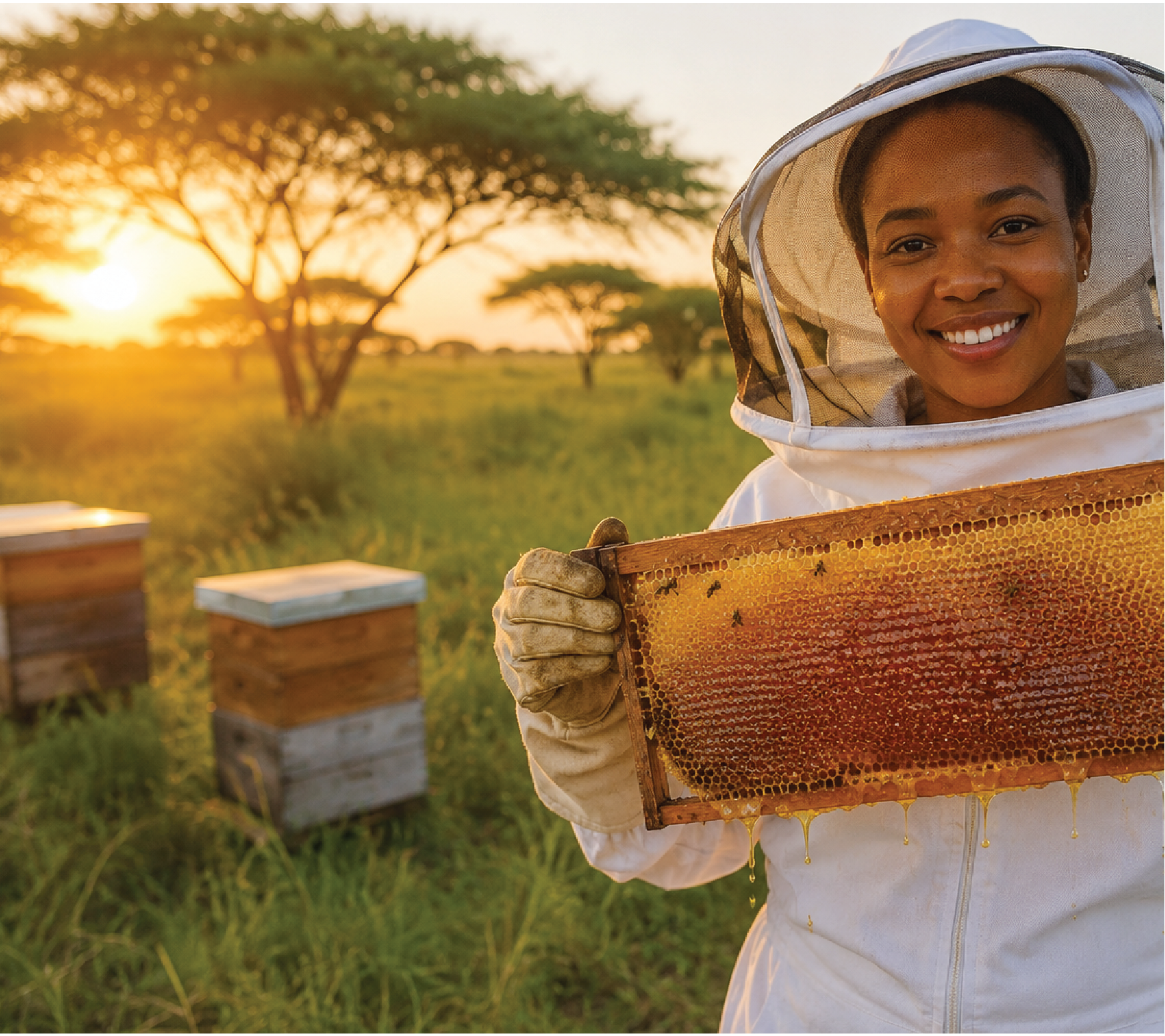
MTB works with emerging beekeepers across South Africa – particularly women and youth in rural communities – offering hands-on beekeeping training and ongoing emerging beekeeper support. Commercial success and meaningful social impact belong together here, not in spite of each other.
The programme
MTB's beekeeping programme recruits and supports community beekeeping participants with:
- Training and mentorship
- 50 hives per participant
- Protective beekeeping clothing
- Full, certified skills development
- Guaranteed buy-back of harvested honey
- 50
- Hives per beekeeper
- 2
- Harvests per year
- 20kg
- Per hive, per harvest
- 2,000kg
- Up to, per beekeeper each year
MTB sources honey from carefully selected beekeepers across South Africa's diverse floral regions – every batch managed under strict quality assurance procedures and fully traceable from beekeeper to consumer.
Why It
Matters
Bees are essential to food production – pollinators support more than 75% of the world's leading food crops. Without healthy populations, yields decline and biodiversity weakens, and bees are under pressure globally from climate change, habitat loss and disease.
South Africa is home to extraordinary floral diversity and some of the world's finest honey – but many emerging beekeepers have historically lacked access to the markets, equipment and support needed to build sustainable businesses. Premium honey markets have remained out of reach not because of quality, but because of infrastructure.
MTB exists to close that gap – connecting skilled, passionate beekeepers to the markets their honey deserves, while strengthening the communities and landscapes that make it possible.
Become a
Beekeeper
MTB is looking for passionate, committed people ready to build a sustainable beekeeping business – no prior experience needed. Our beekeeping programme provides full, certified beekeeping training, equipment, mentorship, and a guaranteed buy-back for every harvest, growing community beekeeping across South Africa.
Thank you for applying. Our team will be in touch soon.
Sorry, we couldn't send your application. Please check every field and try again, or message us on WhatsApp.